
Ministerial Consultation on Climate Crises
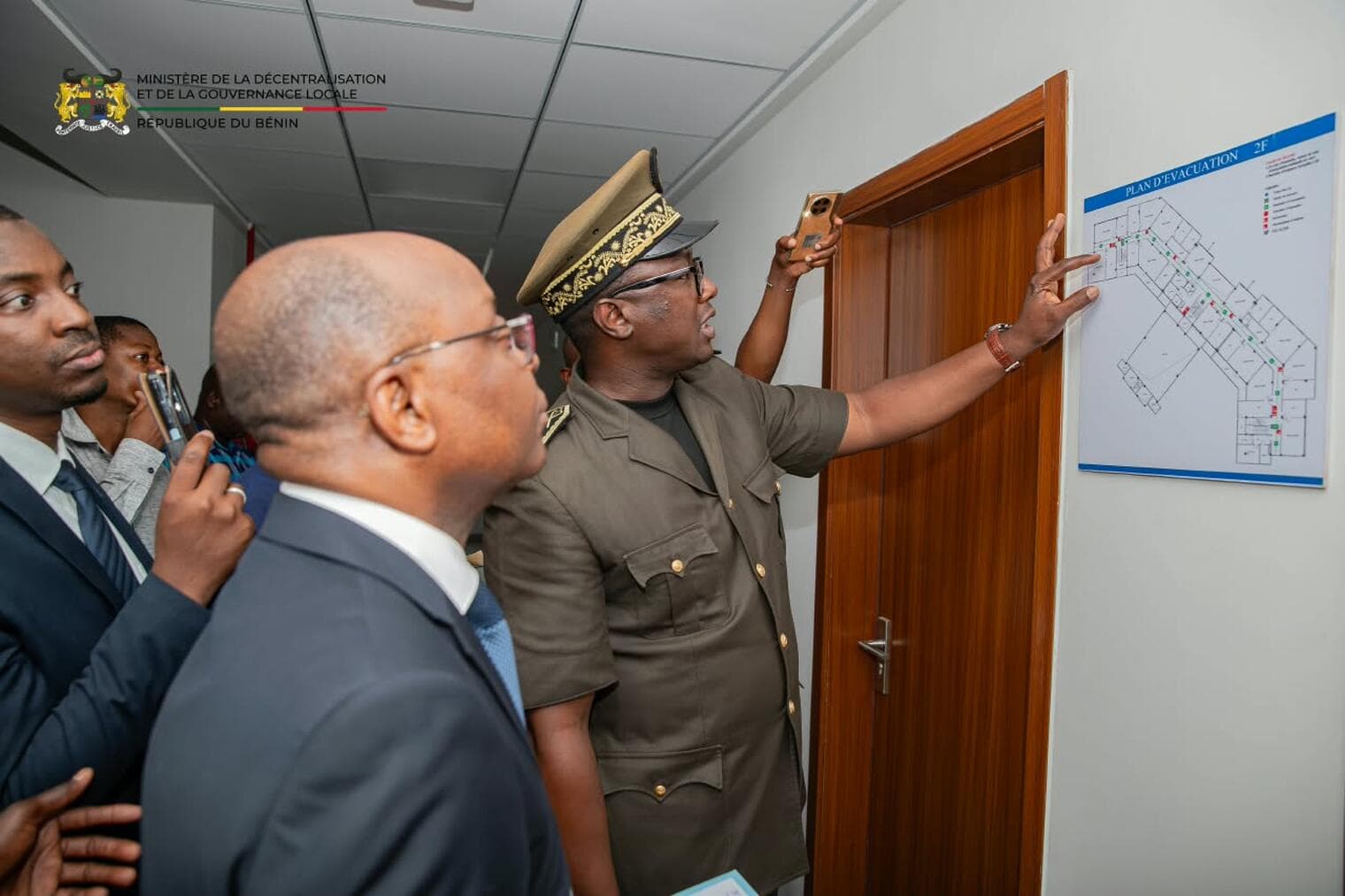
On 6 October 2026, the conference hall of the Ministry of Interior and Public Security hosted a consultation session focused on environmental crises. The meeting brought together four members of the Beninese government. Djibril MAMA CISSÉ, Minister Delegate to the President of the Republic in charge of Interior and Public Security, led the discussions alongside Georges ALE, Minister of Living Environment and Land Transport; Janvier YAHOUEDEOU, Minister of Decentralization and Local Governance; and Édouard DAHOME, Minister of Energy, Water, and Mines.
Delegations from technical and financial partners, as well as international humanitarian organizations, joined government officials to assess operational responses. The Minister Delegate outlined the wide-ranging impacts of torrential rains, flooding, droughts, wildfires, strong winds, and health crises. These events disrupt economic activities, damage public infrastructure, destroy livelihoods, and overwhelm essential services. The government now views disaster risk reduction as a strategic priority linked to security, territorial planning, and sustainable development.
Heavy Toll and CFA 290 Billion Funding Needs
Statistical data presented during the session reported 349,580 affected individuals across the country in 2026. This human toll spans 52,583 households in 1,199 villages and 219 districts. Abdel Aziz BIO DJIBRIL, Director General of the Benin Civil Protection Agency (ABPC), detailed the recorded human and material damages.
Heavy rains, gusts, landslides, and rockfalls triggered severe flooding nationwide. These disruptions led to the collapse of several crossing structures and drowning fatalities. To address the direct consequences of these climate events, the ABPC estimates financing needs at over CFA 290 billion.
Operational Priorities and Coordination Missions
The national platform identified key priorities to enhance public action on the ground. Discussions emphasized crisis anticipation and decision-support tools. Key directions include improving data sharing, operational coordination of relief efforts, mapping vulnerable zones, and integrating resilience into public policies.
The ABPC reaffirmed its role as the coordinating body for disaster response and climate resilience in Benin. To support prevention efforts and post-crisis recovery projects, participants called for mobilizing the necessary financial resources-amounting to the CFA 290 billion identified-from institutional partners.
Share this article
Gallery
Sources
The facts in this article come from the following sources:
- 1Gestion des risques de catastrophe au Bénin : Le gouvernement mobilise les acteurs pour une réponse coordonnéeGouvernement de la République du Bénin · 6 October 2026 official source
Our editorial policy: how our articles are prepared and checked, and how to report an error.
Get new opportunities by email
Scholarships, calls for proposals, funding and development news from Benin and West Africa, as soon as they are published. Unsubscribe in one click.